
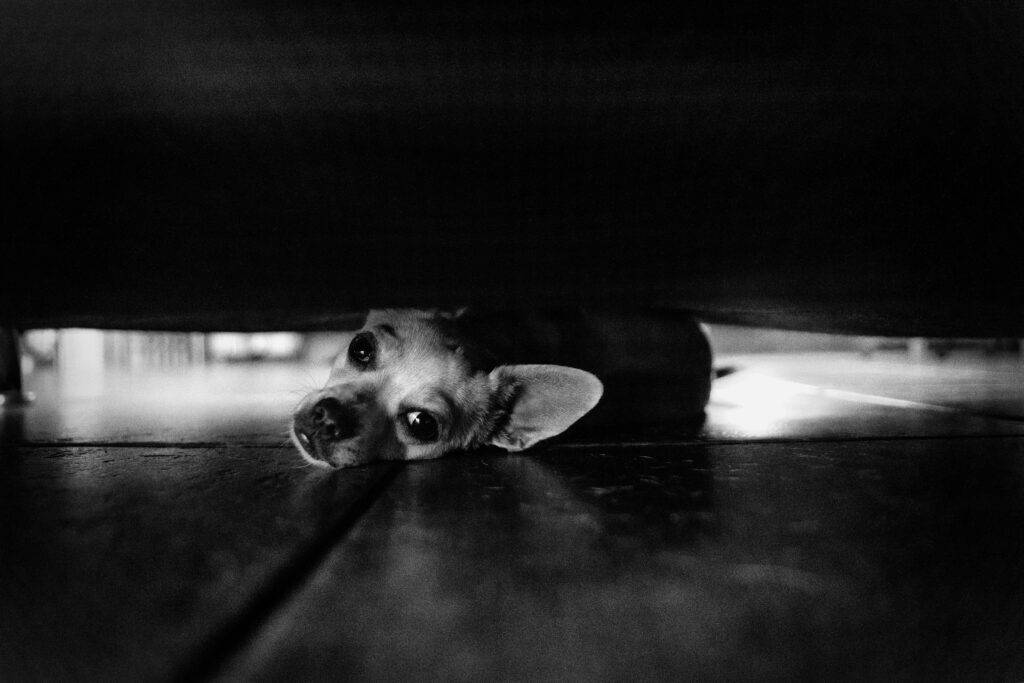

As a trainer with Off Leash K9 Training Erie, I hear from dog owners every year who feel stuck when bad weather hits. Thunderstorms roll in, the wind picks up, and suddenly their calm dog is pacing, barking, or shutting down completely. The good news is that bad weather does not have to derail training. In fact, with the right approach, it can become one of the most valuable opportunities for building calm behavior and confidence.
In this article, I want to explain why storms trigger stress in dogs, how that stress impacts obedience training, and what you can do to help your dog stay grounded when the weather turns rough. When handled correctly, bad weather can actually strengthen training routines instead of breaking them.
Why Bad Weather Affects Dog Behavior
Dogs experience the world differently than we do. Changes in barometric pressure, distant thunder, flashing light, and even static electricity can be overwhelming. For many dogs, bad weather creates uncertainty, and uncertainty often leads to anxiety.
From a training standpoint, this matters because stress interferes with learning. A dog that is anxious during storms may struggle with impulse control, ignore known commands, or regress in behavior. This is not disobedience. It is a stress response.
At Off Leash K9 Training Erie, we focus on helping dogs develop emotional resilience so they can handle environmental changes without falling apart.
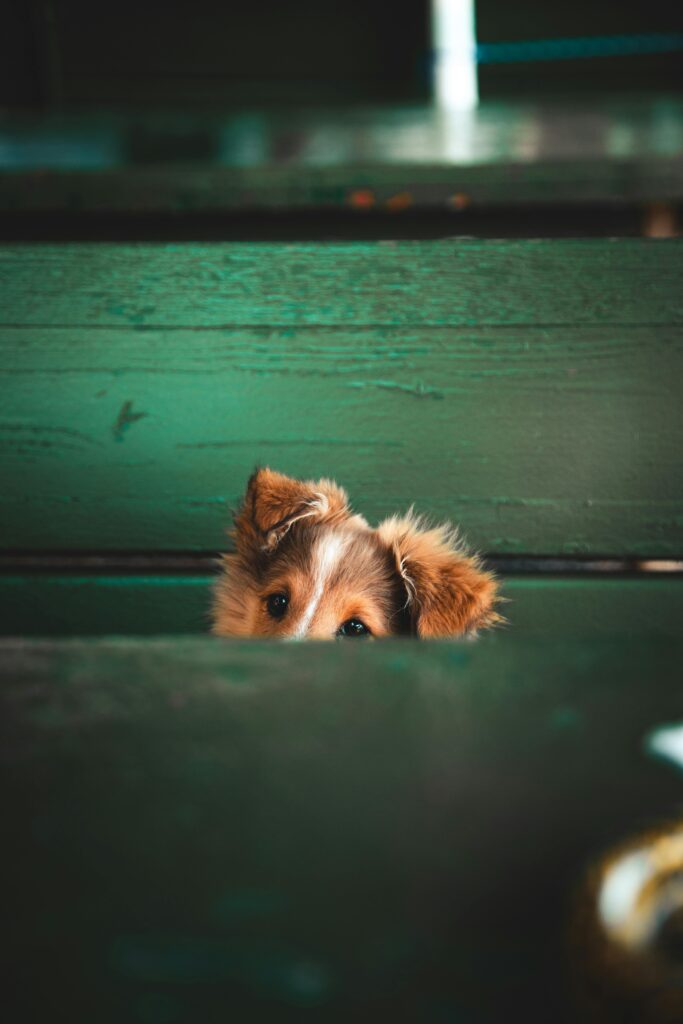
How Storm Stress Shows Up During Training
Bad weather stress often shows up in subtle ways before it becomes obvious. Owners may notice changes during walks, training sessions, or downtime at home.
Common storm-related behaviors include:
-
Clinginess or constant pacing
-
Refusal to settle or hold a place command
-
Increased vocalization
-
Difficulty focusing during obedience training
-
Loss of off-leash reliability
These behaviors are signals that a dog’s nervous system is overloaded. Training calm responses during these moments is part of true behavior transformation.
Training Calm Instead of Avoiding Storms
One of the biggest mistakes owners make is avoiding training during bad weather altogether. While safety always comes first, completely avoiding storms teaches dogs that weather events are something to fear.
Instead, we work on building calm behaviors in controlled ways. This includes reinforcing structure indoors, practicing obedience with mild background noise, and teaching dogs how to relax on command.
Structured programs like Board and Train or Private Lessons at Off Leash K9 Training Erie allow us to gradually expose dogs to stressors while maintaining clear expectations. This process builds dog confidence rather than suppressing fear.
Using Structure to Create Stability
Dogs feel safest when they understand what is expected of them. During storms, structure becomes even more important.
Helpful training strategies include:
-
Practicing place or down commands during storms
-
Rewarding calm behavior instead of anxious movement
-
Maintaining normal routines despite bad weather
-
Using obedience cues to redirect nervous energy
Winter months often provide the perfect opportunity to reinforce these skills, which is why many owners see progress when pairing storm work with seasonal training. We talk more about this approach in our article on why winter training creates perfect progress.
The Role of Obedience Training in Storm Confidence
Strong obedience training gives dogs a job to focus on when stress rises. Commands like sit, down, place, and recall provide clarity and reduce uncertainty.
Programs such as Basic Obedience focus on consistency and follow-through, which directly supports calm behavior during storms. When dogs trust the structure, they rely less on panic responses and more on learned behaviors.
This foundation also improves off-leash reliability because dogs learn to respond even when distractions and environmental stressors are present.
What Science Says About Storm Anxiety
Research-backed training approaches emphasize gradual exposure and consistency. According to guidance from the American Kennel Club on dogs afraid of thunder, helping dogs remain calm during storms requires patience, routine, and reinforcing relaxed behavior rather than reacting to fear.
This aligns closely with how professional dog training approaches storm anxiety. Calm is taught, not forced.
Supporting Your Dog Beyond the Storm
Storm training is not just about weather. It teaches dogs how to handle uncertainty in general. Dogs that learn to stay calm during bad weather are often more confident in new environments, better behaved during travel, and more stable around other stressors.
This mindset carries over into everyday life, including busy households and seasonal disruptions. If holidays or travel also create stress for your dog, our post on holiday travel tips for dogs offers additional strategies for maintaining calm.
Final Thoughts
Bad weather does not have to mean bad behavior. With structure, patience, and professional guidance, storms can become powerful training opportunities. Teaching calm responses during thunder and heavy weather builds confidence, improves obedience training, and supports long-term behavior transformation.
If your dog struggles during storms and you want help building reliable calm behavior, Off Leash K9 Training Erie is here to help. Reach out through our contact page to learn how professional dog training can support your dog through every season.